
Mental Health
Wellness / Mental Health
· 5 minsYou have tried the standard rotation of selective serotonin reuptake inhibitors (SSRIs), spent years in talk therapy, and adjusted your lifestyle routines. Yet, the heavy fog remains, and the daily exhaustion of managing treatment-resistant symptoms leaves you feeling drained. It is a frustrating, isolating cycle. If you are looking into alternative options, you have likely come across ketamine treatments for depression as a potential path forward.
Taking that first step toward an unfamiliar clinical procedure can trigger a lot of anxiety. You want to know exactly what happens behind the closed doors of a clinic before you commit your time and emotional energy.
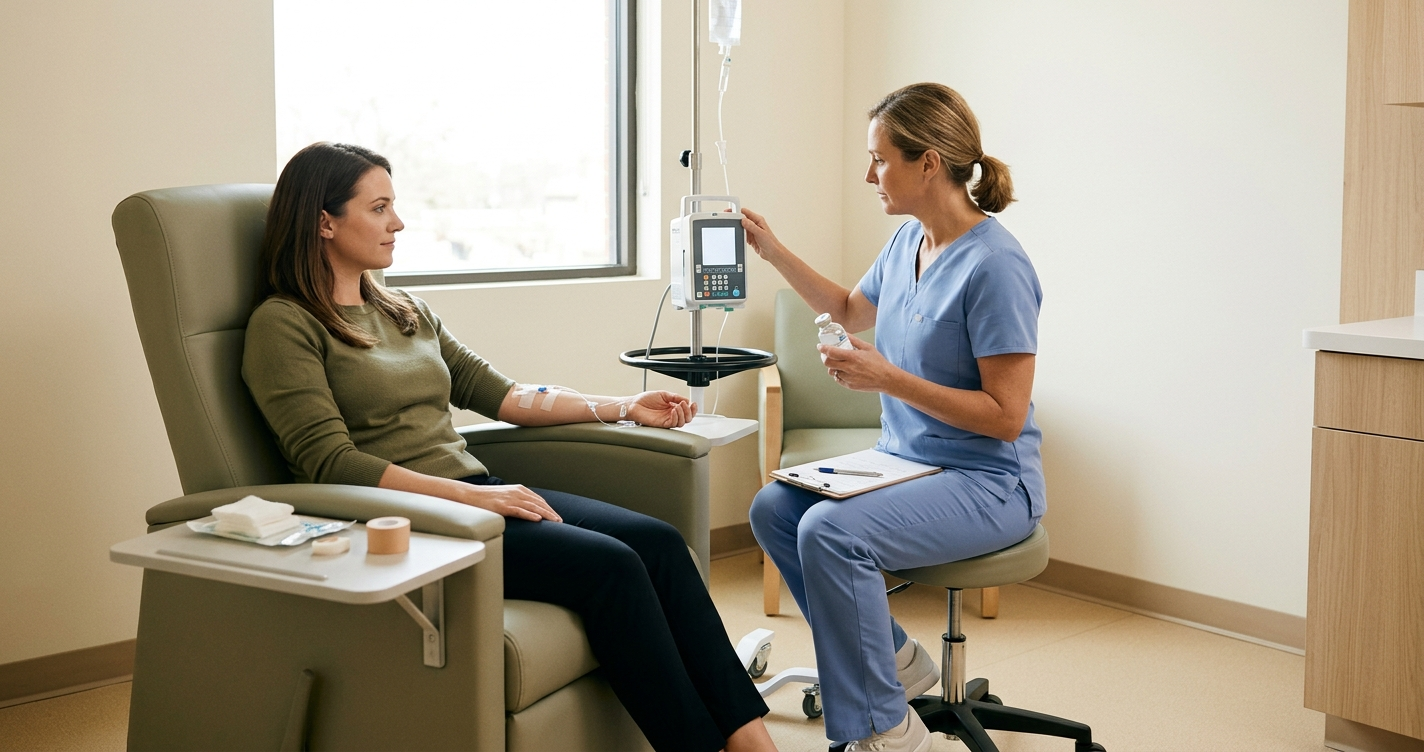
This guide demystifies the entire experience. From the moment you walk through the door to the drive home, here is exactly what to expect ketamine infusion sessions to look and feel like.
Ketamine functions entirely differently than traditional oral antidepressants. While standard medications slowly alter brain chemistry over weeks or months by increasing neurotransmitter levels in the synaptic gap, intravenous ketamine works rapidly by targeting NMDA receptors in the brain. This blocks glutamate, a crucial neurotransmitter, which triggers a rapid cascade of events that helps your brain form new neural connections.
Think of a brain experiencing severe depression like a busy hillside covered in deep, frozen sledding ruts. Every thought and emotion gets stuck in those exact same icy grooves, making it incredibly difficult to change your mental trajectory. Ketamine acts like a fresh, heavy snowfall that fills in those deep ruts. It temporarily softens the old, rigid pathways, allowing your brain to carve out brand-new, healthier tracks with far less resistance. This biological window of opportunity is known as neuroplasticity.
Choosing an intravenous protocol at a local ketamine wellness clinic offers distinct advantages for individuals navigating severe mood disorders.
While individual responses vary based on your health history and overall physiology, clinical data from major medical institutions highlights a consistent pattern of efficacy for this protocol.
When exploring options, you will find a few different administration routes available in the medical landscape. Understanding how they stack up helps you make informed health decisions.
FeatureIntravenous (IV) InfusionIntramuscular (IM) InjectionIntranasal Spray (Esketamine)Bioavailability100% (Direct to bloodstream)~93% (Variable muscle absorption)~30% to 50% (Mucosal absorption)Dose ControlDynamic; can be paused or slowedFixed dose once injected into muscleFixed dose per spray activationSession Length40-minute active drip + recoveryVariable peak + recoverySelf-administered under supervisionClinical FocusHighly personalized wellness supportRapid sedation or standard dosingStrict FDA REMS protocol compliance
Because intravenous ketamine for mood disorders is currently prescribed off-label, traditional health insurance providers rarely cover the cost of the infusions directly.
What this means in practice is that patients generally pay out-of-pocket for these sessions. Across the United States, a single intravenous session typically ranges from $400 to $800. An initial stabilization series of six infusions generally costs between $2,400 and $4,800 total.
Many specialized wellness practices accept Health Savings Accounts (HSA) or Flexible Spending Accounts (FSA) funds. Some can provide itemized superbills to submit to your insurance company for potential partial out-of-network reimbursement.
Your first appointment requires some deliberate logistical planning to ensure everything goes smoothly and safely.
During the drip, you will likely experience mild dissociation, a feeling of physical lightness or heaviness, and altered sensory perceptions. Some patients notice blurred vision, a tingling sensation in their fingers, or a distorted sense of time passing. These temporary ketamine therapy side effects typically fade completely within 30 to 45 minutes after the active infusion ends.
No, you remain fully conscious and awake throughout the entire process. While you will feel deeply relaxed and less inclined to talk, you can speak, open your eyes, and communicate with your care team at any moment if you need something.
Some individuals notice a subtle lift in their mood or a reduction in intrusive thoughts within a few hours after their first or second session. For others, the shift is more gradual, manifesting as an increase in daily energy levels, better sleep quality, or a renewed capacity to engage in everyday activities.
Absolutely. In fact, wearing a pair of high-quality headphones and listening to a pre-arranged playlist of instrumental, ambient music is highly recommended. Bringing a familiar throw blanket or an eye mask can also help you stay relaxed and grounded in the treatment room.
Walking into your first appointment is less about entering a clinical trial and more about accessing thoughtful, patient-focused care tailored to your unique biology. The experience should never feel rushed or transactional. By understanding the timeline, the clinical science, and the physical environment, you can approach your appointment with a sense of calm readiness.
If you are ready to explore whether this approach aligns with your health goals, Sage Health & Wellness Center offers clear guidance for your next step. Our team prioritizes a compassionate, whole-person health approach to help you evaluate your options without pressure. Reach out to schedule an initial clinical consultation today.