Wellness
Wellness / Aesthetics
· 5 mins readA widening part, more strands in the shower drain, and that harsh overhead office lighting on a Tuesday morning can make hair loss feel impossible to ignore. If you are researching hair loss treatment options in San Jose, you are probably not looking for hype. You want clear answers, realistic expectations, and a plan that fits your schedule, your budget, and your goals.
That is exactly where good guidance matters.
Hair thinning can show up slowly or all at once after stress, illness, hormone shifts, weight changes, or genetics. The right next step is not guessing between a dozen products in your Amazon cart. It is understanding what is causing the change and which treatments may actually support healthier growth.
Most non-surgical approaches aim to improve the environment around the hair follicle. Think of the follicle like soil in a planter box. If blood flow is poor, inflammation is high, hormones are working against you, or the growth cycle is disrupted, the hair growing out of that follicle gets weaker, thinner, and shorter-lived.
That is why a thoughtful plan often combines more than one tool. Some treatments focus on scalp stimulation. Some support circulation and follicle activity. Others address shedding triggers, hormone-related thinning, or nutrition gaps. In practice, personalized care starts with the boring but useful details: when the shedding began, whether the hairline or crown changed first, what happened three months ago, what medications changed, and whether your stylist has already pointed out miniaturization around the temples.
The core idea is simple: match the treatment to the pattern and cause, not just the symptom.
At a wellness center, that may include a scalp assessment, medical history review, photos for tracking, and a treatment schedule that works around real life. For busy adults in San Jose, that matters. You need something that fits between school drop-off, Zoom calls, a Caltrain commute, and maybe a Saturday workout in Willow Glen.
For many adults, non-surgical hair loss treatments for adults are appealing because they do not require surgery, general anesthesia, or a long recovery window. The biggest advantages usually look like this:
That last point gets missed a lot.
If you are only treating the visible thinning and ignoring the reason it started, you may spend months frustrated by slow or uneven progress.
Hair loss treatment does not move at social media speed. Hair grows in cycles, and visible change usually takes patience.
Here are practical numbers we discuss with patients all the time:
Hair restoration is usually a slow-build process, not a one-and-done fix.
What this means in practice: if you take baseline photos in bright bathroom light and compare them every two weeks, you may think nothing is happening. Compare month 1 to month 4 instead. That is a much fairer test.
People searching for what to expect from hair loss treatment usually want a side-by-side view. Here is a practical comparison of common non-surgical options adults ask about in San Jose.
OptionBest forTypical timelineProsTradeoffsTopical or oral medicationsPattern thinning, ongoing shedding3-6 months for early changesConvenient, often lower monthly cost, can be combined with in-office careRequires consistency; not right for every medical historyPRP or growth-factor-based injectionsEarly to moderate thinning, support for weak folliclesSeries of 3-4 sessions, then maintenanceOffice-based, no surgery, popular for personalized plansInjections, variable response, maintenance neededMicroneedling with scalp supportMild thinning, scalp stimulation, combo care4-8 weeks for routine buildoutCan pair with other treatments, short visitsNeeds repeat sessions; scalp sensitivity can happenPeptide or wellness-based support plansHair changes linked to stress, recovery, or broader wellness goalsVaries, often 8-16 weeks+Addresses bigger picture, customizableUsually works best as part of a broader plan, not as a stand-alone answer
Here is the catch: the “best” option often depends less on what is trending and more on whether you are dealing with androgenetic hair loss, stress-related shedding, postpartum changes, traction, or thinning linked to metabolic or hormonal shifts.
A personalized hair loss treatment in San Jose should not look identical for a 32-year-old dealing with postpartum shedding, a 48-year-old noticing crown thinning, and a man who started seeing recession at the temples after years of assuming it would stop on its own.
Costs vary by provider, treatment type, and how many sessions your plan includes. In San Jose and the broader Bay Area, prices tend to run higher than the national average, so it helps to set expectations early.
Typical ranges you may see include:
Real talk: cheap treatment is not always a bargain. If a low price leaves out the assessment, follow-up photos, maintenance planning, or guidance on why the shedding started, you may spend more fixing a weak plan later.
Ask for clarity on the full cost, not just the per-session number. That includes the initial consult, recommended number of visits, home care products, and whether maintenance is expected after the first round.
Choosing among non-surgical hair loss treatments for adults is easier when you know the practical details that affect day-to-day success.
The right plan depends on the pattern of loss, how long it has been happening, your age, medical history, scalp condition, and goals. A consult should sort out whether you are dealing with gradual pattern thinning, temporary shedding, or another concern entirely. That is why what to expect from hair loss treatment starts with evaluation, not a sales pitch.
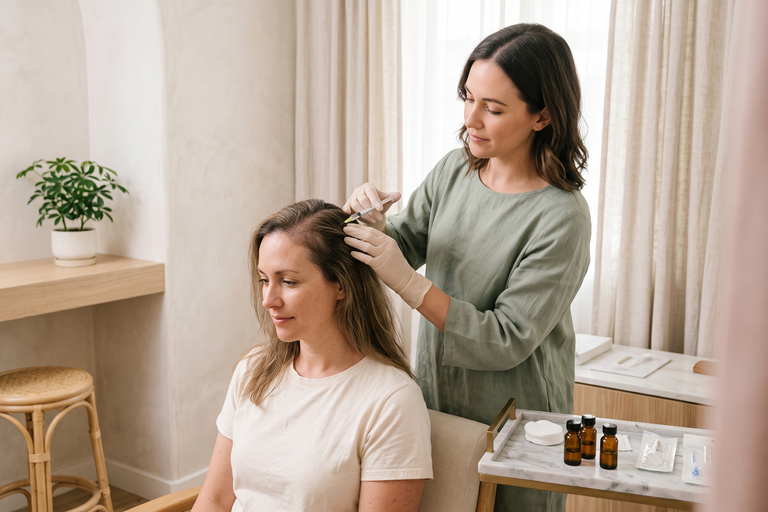
Comfort varies by treatment. Topical plans are usually simple, while microneedling or injection-based care may cause temporary discomfort, pressure, or tenderness. Most patients describe these treatments as manageable, especially when the provider explains each step and adjusts the experience to your comfort level.
Most people need patience. You may notice less shedding first, then gradual changes in thickness or density over the next 3-6 months. Because hair cycles move slowly, early improvement often shows up in photos before it is obvious in the mirror.
Absolutely. Women often seek care for widening parts, diffuse thinning, postpartum shedding, or hair changes linked to hormones and stress. A personalized hair loss treatment in San Jose should be inclusive, practical, and tailored to the specific pattern you are seeing.
Bring a list of medications and supplements, a rough timeline of when the shedding started, and any past treatments you tried. If you have photos from three, six, or twelve months ago, those help too. The more precise the history, the easier it is to build thoughtful treatment options for your unique needs.
Hair thinning can chip away at confidence, but you do not have to sort through every serum, clinic ad, and Reddit thread on your own. The best hair loss treatment options in San Jose start with expert care designed around your goals, your health history, and what is realistic for your lifestyle.
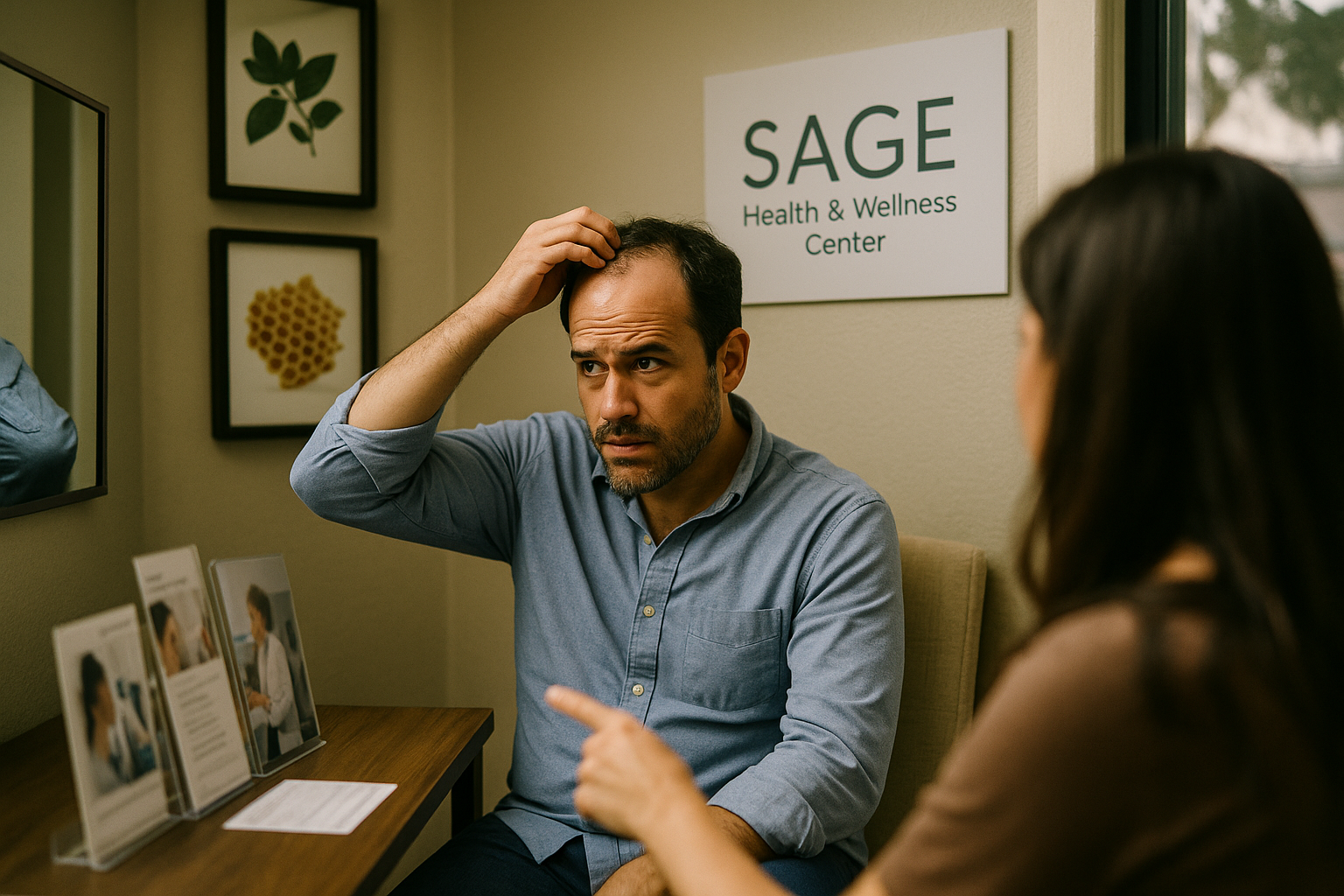
At Sage Health & Wellness Center, we take a personalized approach to wellness and aesthetics so you can explore treatment options with clarity and confidence. If you are ready to understand what may be driving your hair changes and which non-surgical path makes sense, schedule a consultation with our San Jose team.